ZATCA e-invoicing readiness means having an invoicing solution that can generate, stamp and transmit invoices in the format the Zakat, Tax and Customs Authority (ZATCA) requires, and an accounting process that keeps the general ledger in step with what was cleared or reported. Most of the technical work sits in the invoicing system. The accounting work is about master data, VAT accounts and reconciliation.
This guide explains both phases, the wave timetable up to 2027, what a compliant invoice contains, and a readiness checklist. It also says plainly what Ledgeriano does and does not do, so you can plan the right architecture.
General information, not tax advice. Dates and thresholds were checked against ZATCA announcements as reported by EY in August 2026, as of November 2026. ZATCA notifies each taxpayer in scope directly, and its e-invoicing portal is the authority. Confirm your wave and technical requirements there or with a tax adviser.
ZATCA e-invoicing at a glance
| Item | Detail (as of November 2026) |
|---|---|
| Who | Resident VAT registered taxpayers in Saudi Arabia (and third parties issuing invoices on their behalf) |
| VAT rate | 15% standard rate |
| Phase 1: generation | Since 4 December 2021: issue and store invoices electronically, with a QR code on simplified invoices |
| Phase 2: integration | Since 1 January 2023, in waves: connect the solution to ZATCA's FATOORAH platform |
| Latest announced wave | Wave 25: VAT-able revenue above SAR 187,500 in 2022, 2023, 2024 or 2025; comply by 1 February 2027 |
| Notice | ZATCA notifies targeted taxpayers at least six months before their integration date |
| Invoice types | Standard tax invoices (mainly B2B) are cleared; simplified tax invoices (mainly B2C) are reported |
| Format | UBL 2.1 XML (or PDF/A-3 with the XML embedded), cryptographic stamp, QR code, UUID, hash of the previous invoice |
Sources: EY Global Tax News, Saudi Arabia announces 25th wave of Phase 2 e-invoicing integration (10 August 2026), and ZATCA's e-invoicing portal.
What is ZATCA e-invoicing?
ZATCA e-invoicing (branded FATOORAH) is Saudi Arabia's mandatory electronic invoicing system for VAT. Invoices, credit notes and debit notes must be issued as structured electronic documents by a compliant solution, never by hand or as an editable file. Paper or a Word template is not an e-invoice, and neither is a PDF on its own.
The goal is real-time visibility: ZATCA sees B2B invoices before the buyer does and B2C invoices within a day, which makes VAT gaps much harder to hide and gives honest businesses fewer audit queries.
What are Phase 1 and Phase 2?
Phase 1 is about generating invoices electronically; Phase 2 is about integrating with ZATCA so each invoice is checked or reported.
| Phase 1: generation | Phase 2: integration | |
|---|---|---|
| Effective | 4 December 2021, all VAT registered taxpayers | From 1 January 2023, by waves |
| What you must do | Issue and store invoices with a compliant solution; QR code on simplified invoices; required fields | Produce UBL 2.1 XML, stamp it, chain invoice hashes, onboard the device and send invoices to FATOORAH |
| Prohibited | Handwritten invoices, editable invoices, tampering with stored invoices | Same, plus solutions that cannot connect to ZATCA |
| B2B (standard) invoices | Generated electronically | Cleared by ZATCA before sharing with the buyer |
| B2C (simplified) invoices | Generated with a QR code | Reported to ZATCA within 24 hours |
Which wave am I in?
Your wave depends on your VAT-able revenue (excluding VAT) in the reference years ZATCA names for each wave. The thresholds have fallen steadily, from SAR 3 billion in the first wave to SAR 187,500 in Wave 25. The three most recent waves, as reported by EY:
| Wave | Revenue threshold | Reference years | Integration period |
|---|---|---|---|
| 23 | Above SAR 750,000 | 2022, 2023 or 2024 | 1 January to 31 March 2026 |
| 24 | Above SAR 375,000 | 2022, 2023 or 2024 | 1 April to 30 June 2026 |
| 25 | Above SAR 187,500 | 2022, 2023, 2024 or 2025 | From 1 February 2027 |
Wave 25 is the first to use 2025 revenue, so a business that crossed SAR 187,500 only last year can still be in scope. Taxpayers below the threshold should watch for later waves, and every taxpayer should keep its Phase 1 obligations meanwhile.
Worked example: checking the threshold
A Riyadh design studio had VAT-able revenue (excluding VAT) of SAR 160,000 in 2023, SAR 172,000 in 2024 and SAR 194,000 in 2025. The 2025 figure is above SAR 187,500, so the studio falls in Wave 25 and must comply by 1 February 2027, even though no earlier year qualified. Its revenue report by year, net of VAT, is the evidence it needs, which is why revenue and VAT should sit in separate accounts.
What does a compliant e-invoice contain?
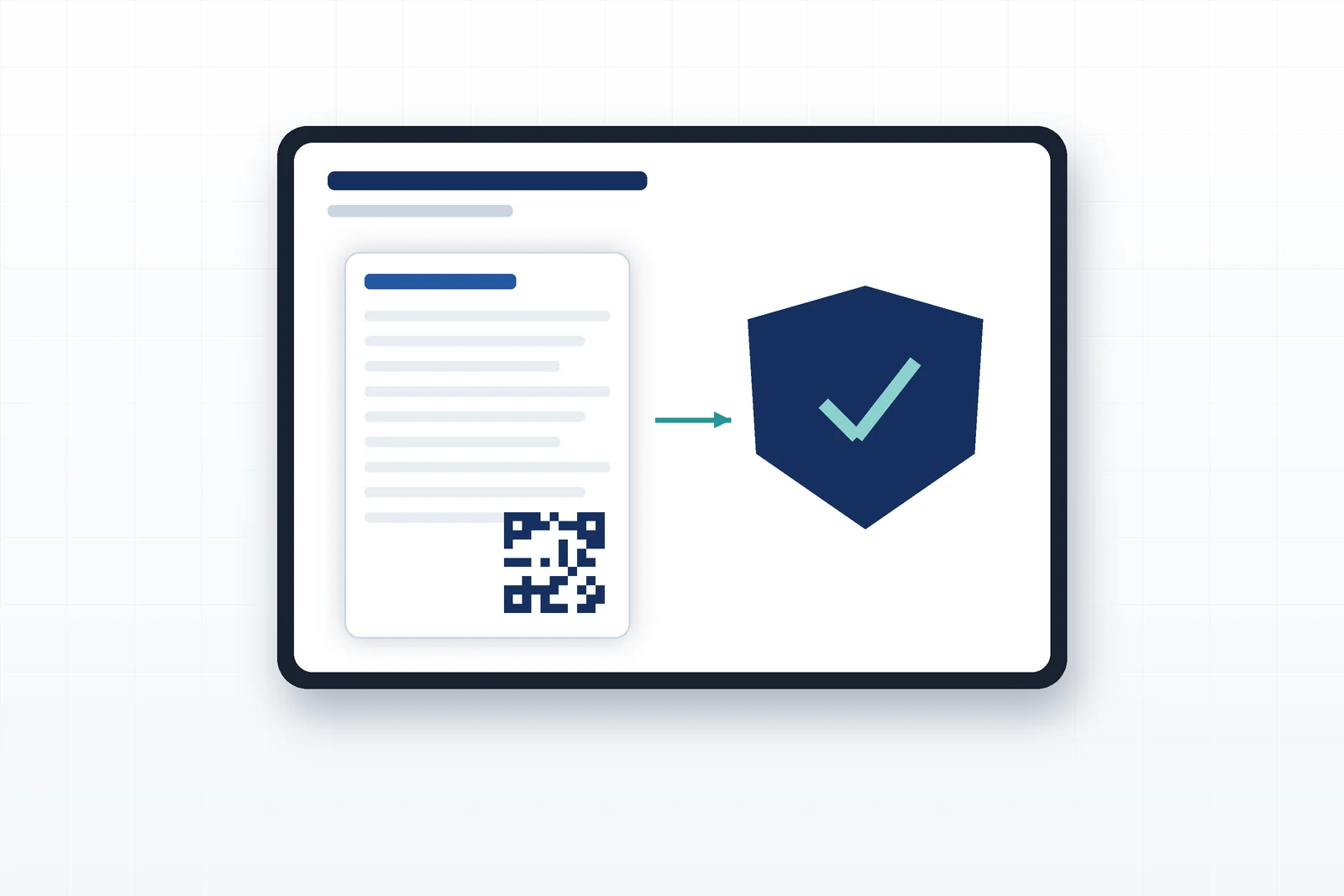
A Phase 2 e-invoice is a structured XML document with security features that prove who issued it and that it has not been changed. The invoicing solution produces these elements, not the accountant:
- UBL 2.1 XML with the mandatory fields (seller and buyer VAT numbers for standard invoices, line details, VAT category and amount per line, totals).
- A UUID that identifies the invoice globally, plus the sequential invoice number and an invoice counter.
- A hash of the previous invoice, which chains invoices so a deleted or altered invoice breaks the chain.
- A cryptographic stamp generated with the certificate (CSID) issued to the onboarded solution.
- A QR code carrying seller name, VAT number, timestamp, totals, VAT and, in Phase 2, the hash and signature data.
- Clearance or reporting: standard invoices go to FATOORAH for clearance and are only valid once ZATCA returns them stamped; simplified invoices are reported within 24 hours of issue.
Standard vs simplified tax invoice
A standard tax invoice is issued to a business (or anyone who asks for one to claim input VAT) and must show the buyer's details; under Phase 2 it is cleared before it is shared. A simplified tax invoice is issued for B2C sales, such as a retail receipt, and is reported after issue. Credit and debit notes follow the type of the original invoice.
Who does what: invoicing solution, ledger and team
E-invoicing compliance belongs to the invoicing solution, while the general ledger records the accounting consequences. Keeping that split clear avoids buying the wrong tool.
| Task | Compliant invoicing solution or ERP | General ledger | Finance team |
|---|---|---|---|
| Generate XML, stamp, QR, hash chain | Yes | No | Configure |
| Onboard device and obtain CSID on the FATOORAH portal | Yes | No | Approve |
| Clearance and reporting to ZATCA | Yes | No | Monitor rejections |
| Revenue, receivables and output VAT entries | Sends data | Yes | Review |
| VAT return preparation | Supplies registers | Supplies account balances | Prepare and file |
| Zakat and financial statements | No | Yes | Prepare and file |
What Ledgeriano does and does not do
Ledgeriano is a multi-entity general ledger with an optional inventory and trade module. It does not integrate with ZATCA, does not onboard devices or hold a CSID, and does not generate e-invoices that meet Phase 1 or Phase 2 requirements. Its own sales invoices are internal accounting documents, so a business in Saudi Arabia must issue its customer invoices from a ZATCA compliant solution.
What Ledgeriano does well in this setup:
- Keeps the books of each company on the GCC IFRS chart, with input VAT, output VAT, reverse charge VAT, a VAT settlement account and Zakat payable already in place (see the chart of accounts guide).
- Receives postings through its REST API. Your invoicing system posts one journal entry per cleared invoice, with the invoice UUID as the
Idempotency-Key, so a retried request returns the existing entry instead of creating a duplicate. - Keeps posted entries immutable and corrections as reversals, with an audit trail, which mirrors how credit notes work in e-invoicing.
- Runs several companies side by side, for groups with a Saudi entity next to UAE or other subsidiaries (multi-entity accounting).
- Supports Zakat accounting, covered in the Zakat accounting guide.
How should the ledger connect to a compliant invoicing system?
The cleanest pattern is "invoice first, entry second": the invoicing system issues and clears the invoice, then posts the accounting entry using the cleared invoice data. That way the ledger never contains revenue ZATCA has not seen.
Here is the entry a Jeddah distributor's invoicing system posts after ZATCA clears invoice INV-2026-00871 for SAR 40,000 plus 15% VAT (codes from the GCC IFRS template):
curl -X POST https://api.ledgeriano.com/api/v1/journal-entries \
  -H "Authorization: Bearer $LEDGERIANO_API_KEY" \
  -H "Content-Type: application/json" \
  -H "Idempotency-Key: 3f0c9d2e-7a41-4c3b-9b8e-0d5a6f2c1e77" \
  -d '{
    "entry_date": "2026-11-03",
    "voucher_type": "SAL",
    "reference": "INV-2026-00871",
    "description": "Cleared standard tax invoice INV-2026-00871",
    "status": "posted",
    "lines": [
      { "account_code": "110201", "party_code": "C014", "debit": 46000 },
      { "account_code": "410101", "credit": 40000 },
      { "account_code": "210301", "credit": 6000 }
    ]
  }'
Rules that keep this robust:
- Post only cleared or reported invoices. A rejected standard invoice must not reach the ledger.
- Use the UUID as the idempotency key and the invoice number as the reference, so both are searchable.
- Post credit notes as new entries that reverse the revenue and VAT, never as edits.
- Reconcile monthly: the total VAT on cleared and reported invoices for the month must equal the movement on output VAT payable.
ZATCA e-invoicing readiness checklist
Use this list six months before your integration date (ZATCA's minimum notice period):
- Confirm your wave from your revenue by year and ZATCA's notification.
- Choose a compliant solution: an ERP, POS or invoicing platform that supports Phase 2, or a certified integration layer in front of your current system.
- Clean master data: customer VAT numbers, commercial registration numbers, addresses and item VAT categories.
- Map invoice types: which sales produce standard invoices and which produce simplified ones, plus credit and debit notes.
- Onboard every device or system that issues invoices on the FATOORAH portal and store the certificates securely.
- Test in the sandbox, including rejections, credit notes and offline scenarios.
- Connect the ledger: map invoice fields to accounts, parties and cost centers, and post via API with idempotency keys.
- Set a reconciliation routine between cleared invoices and output VAT, and include it in your month-end close checklist.
- Train staff to correct with credit notes, never by deleting or reissuing.
Common e-invoicing readiness mistakes
- Assuming the accounting software handles compliance. Check whether it is a compliant invoicing solution or only a ledger.
- Letting two systems issue invoices for the same sales stream, which breaks numbering and the hash chain.
- Posting revenue from sales orders instead of cleared invoices, so the ledger and ZATCA disagree.
- Ignoring simplified invoices. B2C reporting within 24 hours applies to every till and online checkout.
- Leaving VAT numbers incomplete in the customer master, which causes clearance rejections.
How to prepare your books for ZATCA Phase 2
- 1
Confirm your wave
Check VAT-able revenue (excluding VAT) for each reference year against the wave thresholds and ZATCA's notification.
- 2
Select a compliant invoicing solution
Use an ERP, POS or invoicing platform that supports Phase 2 clearance and reporting, and retire any other invoice sources.
- 3
Clean customer and item data
Complete VAT numbers, addresses and VAT categories so invoices pass validation.
- 4
Onboard and test
Onboard each issuing system on the FATOORAH portal and test clearance, reporting, rejections and credit notes in the sandbox.
- 5
Connect the general ledger
Post one entry per cleared or reported invoice through the accounting API, using the invoice UUID as the idempotency key.
- 6
Reconcile every month
Agree total VAT on cleared and reported invoices with the movement on the output VAT account before closing the month.
Frequently asked questions
What is ZATCA Phase 2 e-invoicing?
+
Phase 2, the integration phase, requires taxpayers to connect their invoicing solution to ZATCA's FATOORAH platform. Standard tax invoices are cleared by ZATCA before they are shared with the buyer, and simplified invoices are reported within 24 hours. It started on 1 January 2023 and is rolled out in waves.
What is the threshold for ZATCA wave 25?
+
Wave 25 covers taxpayers whose VAT-able revenue exceeded SAR 187,500 in 2022, 2023, 2024 or 2025. According to EY's August 2026 alert, they must comply with Phase 2 by 1 February 2027.
What is the difference between a standard and a simplified tax invoice?
+
A standard tax invoice is issued mainly for B2B sales and shows the buyer's details; under Phase 2 it must be cleared by ZATCA first. A simplified tax invoice is issued mainly for B2C sales and is reported to ZATCA within 24 hours.
Is a PDF invoice valid under ZATCA e-invoicing?
+
A plain PDF is not enough. Phase 2 invoices must be UBL 2.1 XML, or PDF/A-3 with the XML embedded, with a cryptographic stamp and a QR code produced by a compliant solution.
What happens if I am not ready by my wave deadline?
+
Non-compliance can lead to penalties under the e-invoicing regulations, and invoices that are not issued properly can cause problems for your customers' input VAT claims. Check the current penalty rules with ZATCA.
Does Ledgeriano integrate with ZATCA?
+
No. Ledgeriano does not connect to FATOORAH and does not generate compliant e-invoices. Businesses issue invoices from a ZATCA compliant solution and post the resulting entries to Ledgeriano through its API, where the general ledger, VAT accounts and Zakat are kept.
Do e-invoicing rules apply to credit notes?
+
Yes. Credit and debit notes are issued electronically and follow the same clearance or reporting route as the original invoice type.
How long before my integration date will ZATCA notify me?
+
ZATCA has said it notifies targeted taxpayers at least six months before their integration date. Start your readiness project as soon as you receive the notice, or earlier if your revenue is close to the next threshold.
Reviewed by our accounting specialists. Published: